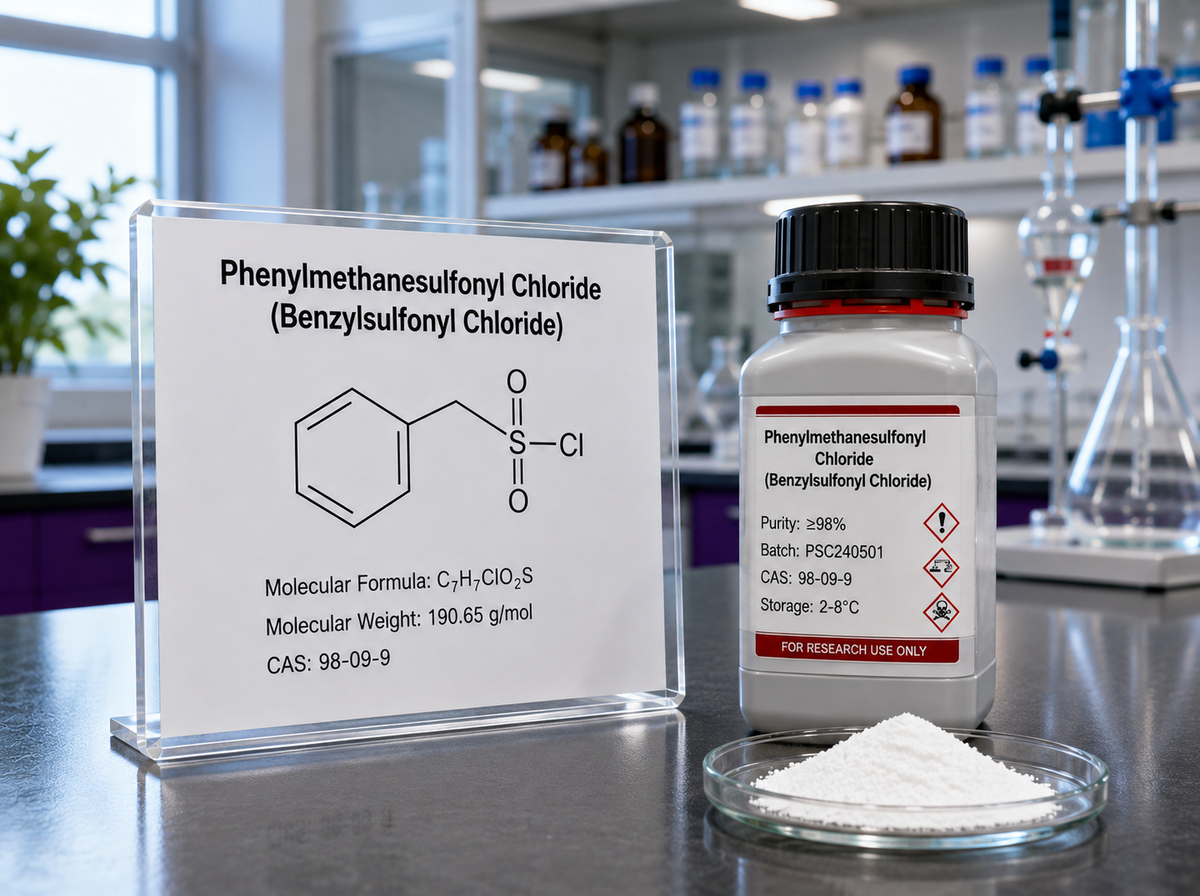
Product Overview
- Phenylmethanesulfonyl Chloride, frequently identified across industrial organic synthesis networks by its synonym Benzylsulfonyl Chloride, is an essential organosulfur building block compound. Chemically, it anchors a highly reactive sulfonyl chloride function to a benzyl aromatic ring core. It is commercially supplied as a white to off-white, pungent crystalline solid mass or granular powder. ProCorBay International supplies exceptional, synthesis-ready Phenylmethanesulfonyl Chloride to chemical processing operations, pharmaceutical intermediate laboratories, and custom enzyme-blocking research facilities globally.
- This compound is manufactured via the clean chlorosulfonation of benzyl chloride or the reaction of sodium benzylsulfonate matrices with phosphorus oxychloride under strict temperature controls, followed by fractionated vacuum crystallization to isolate uniform crystalline granules. ProCorBay coordinates strategic supply tracks with premier organosulfur chemical complexes to deliver material featuring ultra-low free hydrochloric acid properties, minimal ring-chlorinated variations, and low moisture indices.
- Within advanced biochemistry and pharmaceutical synthesis lines, this molecule represents a powerful multi-purpose technical tool. It acts as a premier sulfonylation reagent, introducing stable benzylsulfonyl protective groups onto sensitive amine and hydroxyl networks. It functions as a definitive protease inhibitor widely chosen by medical research labs to stop protein breakdown during cellular isolation loops. ProCorBay handles deep bulk inventory allocations to ensure reliable production continuity for global pharmaceutical plants.
Applications
- Pharmaceutical Intermediates: Primary starting molecule utilized to synthesize generic enzyme blockers, protease inhibitors, and anti-infective drug lines.
- Peptide Chemistry: Specialized sulfonylation tool used to introduce protective organic groups during complex peptide sequence couplings.
- Biochemical Research: Definitive laboratory reagent leveraged to halt unintended enzymatic protein autolysis in biological samples.
Benefits
- Highly Reactive Sulfonyl Carbon: Delivers clean, step-efficient sulfonylation transformations under mild operating temperatures.
- High Chemical Assay: ≥ 98.0% minimum purity assay content minimizes secondary reaction side-products.
- Excellent Free-Flow Properties: Crystalline texture avoids aggressive clumping inside automatic hopper charging systems.
- Definitive Protease Block: Internationally recognized technical tool for stable biochemical sample management.
- Stable Carbon Ring Structure: Retains its core framework parameters during long-distance international transit loops.

Related Products
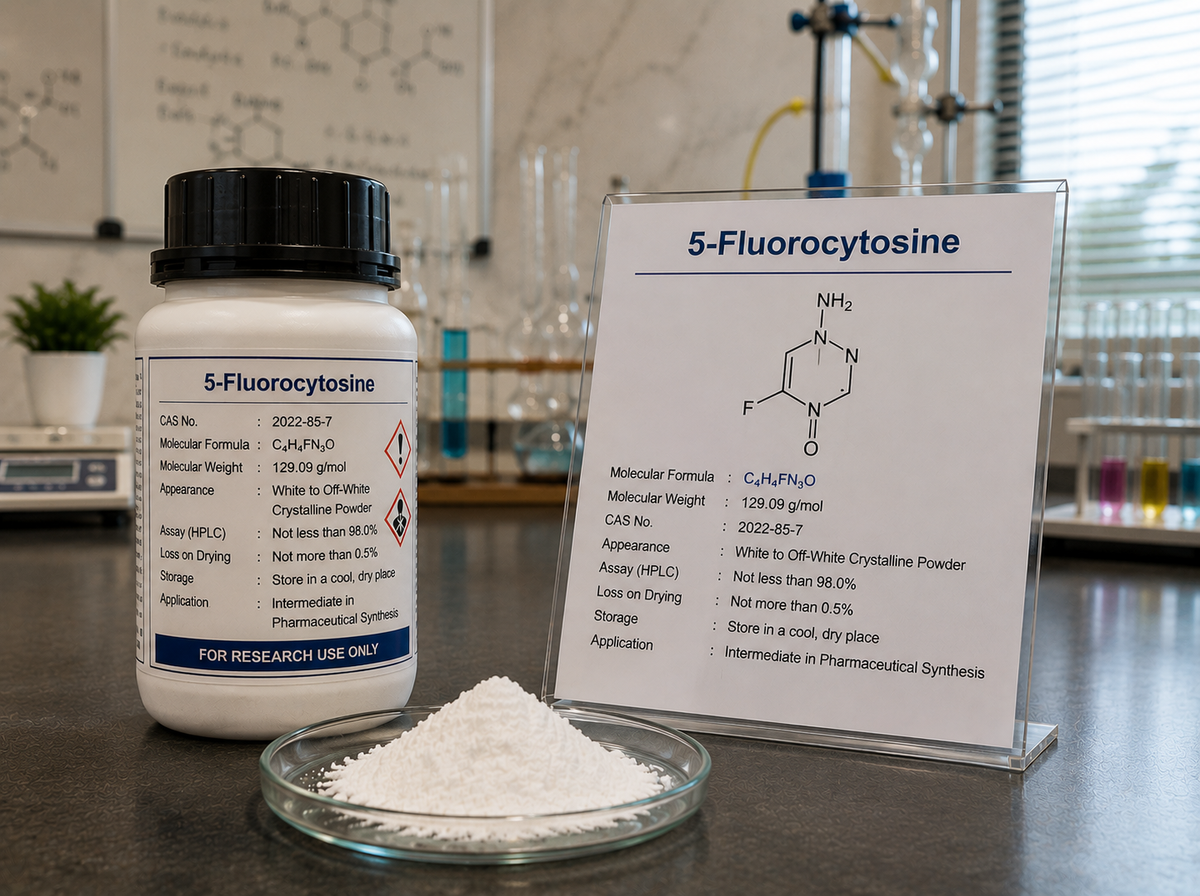
5-Fluorocytosine
5-Fluorocytosine, known across medical and regulatory frameworks by its g...
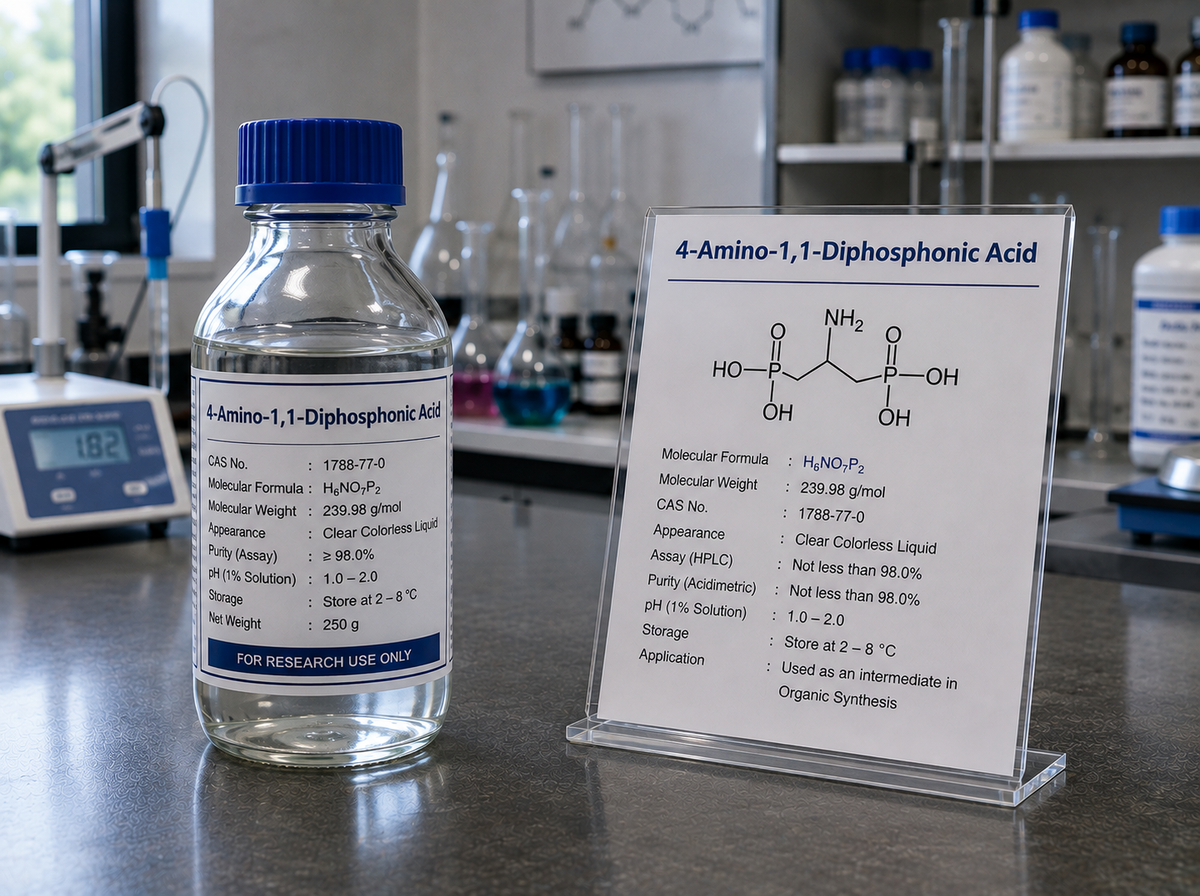
4-Amino-1,1-Diphosphonic Acid
4-Amino-1,1-Diphosphonic Acid, widely identified across international act...
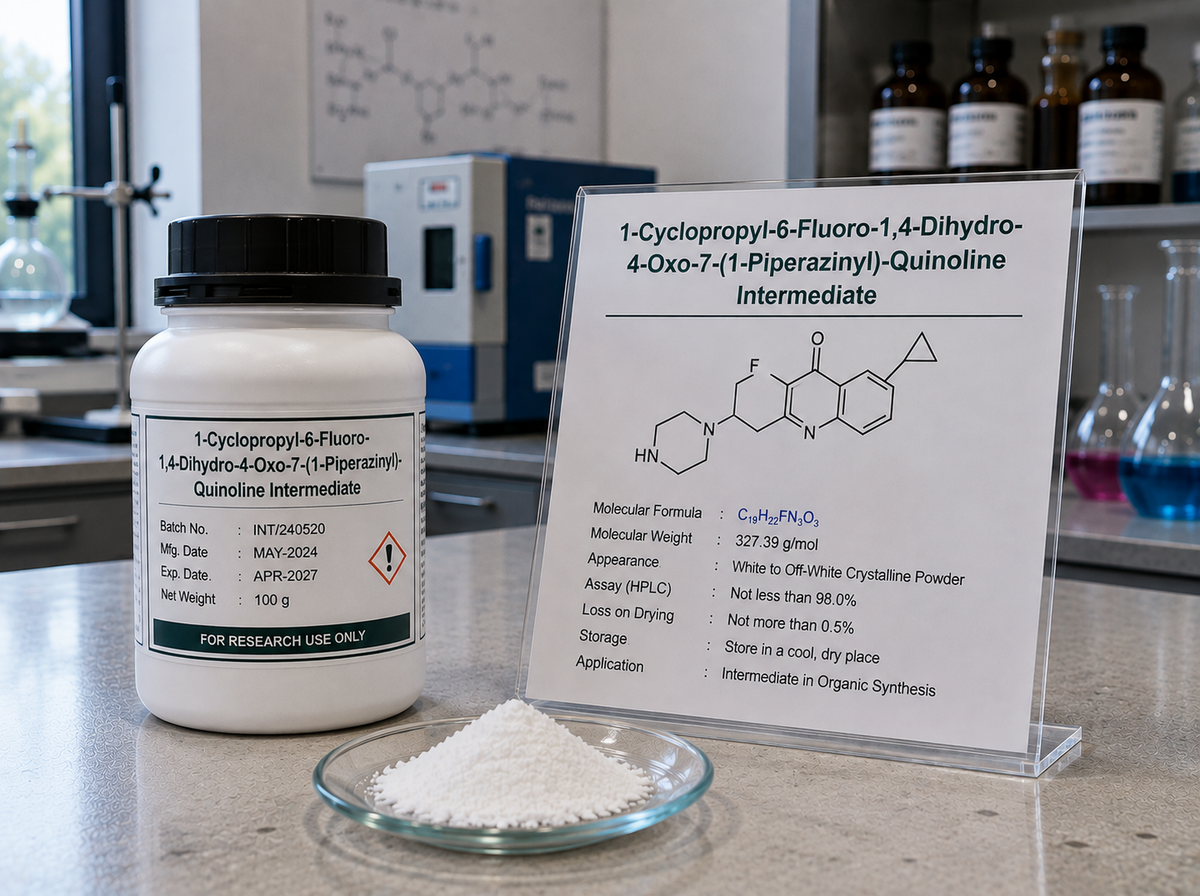
1-Cyclopropyl-6-Fluoro-1,4-Dihydro-4-Oxo-7-(1-Piperazinyl)- Quinoline Intermediate
1-Cyclopropyl-6-Fluoro-1,4-Dihydro-4-Oxo-7-(1-Piperazinyl)- Quinoline Interme...
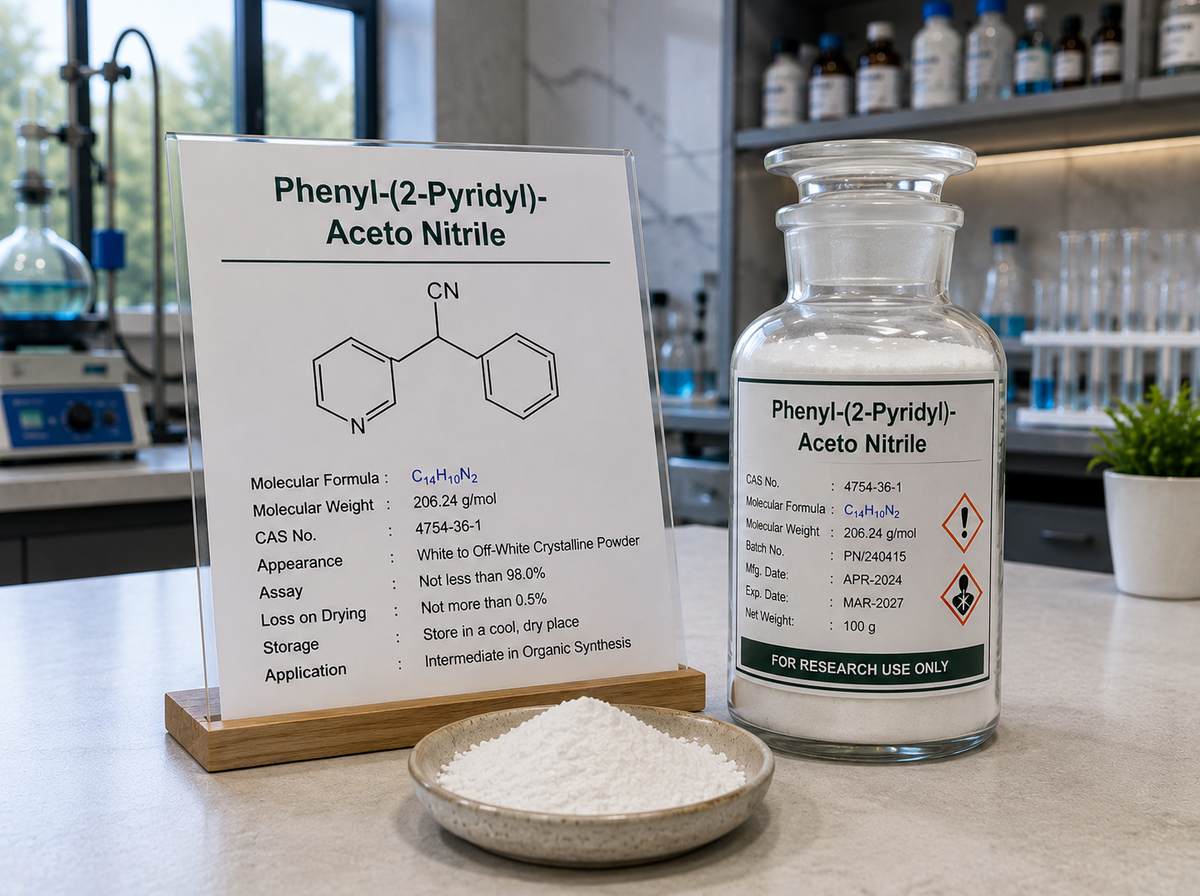
Phenyl-(2-Pyridyl)-Aceto Nitrile
Phenyl-(2-Pyridyl)-Aceto Nitrile is an advanced substituted acetonitrile arom...